Tokyo to Saigon — Seeing One Bank Account Through
Every form had to be rewritten in blue pen, and at the big bank we were shot down over a missing document. A story of not giving up — of Ms. V's turnaround, and a young banker's message: I saw your money. The record of opening our corporate and personal accounts in Vietnam, seen through to the end.
I’d obtained the IRC (investment registration certificate) and finished applying for the ERC (enterprise registration certificate). Once the ERC was issued, we could finally open a corporate bank account. We’d come this far — all that was left was to open an account. Or so I thought.
As I looked into it, it turned out that in Vietnam even a brand-new, tiny company can walk into a big bank and open an account without fuss. Back in late 2009, when I founded Goldrush Computing, I’d gone to a Japanese megabank knowing nothing and been turned away at the door. So my reaction was, “Wait, really? That’s allowed?”
One branch makes all the difference
Like Japan, Vietnam has three major megabanks. I talked it over with President S and settled on Bank X, which was said to be used to foreigners. I had Hector go to a branch to ask. The first branch he tried, in District 7, gave him a distinctly cold shoulder: “We can’t tell you the details without the ERC.” But the District 1 branch that President S recommended — the one that handles many Japanese companies — was completely different. “They seemed used to it, and the explanation was easy to follow,” Hector messaged me the following week. The same bank, and this much of a gap. The advice of those who’ve gone before really does matter.
The person there emailed us the application forms. I opened the attached zip and — eleven documents, densely filled with Vietnamese. Maybe because I opened it in the evening at the end of a workday, my head started to spin.
Rewriting everything in blue pen
I’d filled out the forms back in Japan, checking the meaning with Google Translate and ChatGPT, but in the end nothing beats sitting next to Hector, a native Vietnamese speaker, and going through them together. The day before we applied, the office still had no printer. For the passport copies, the night-shift man at our hotel and An, the day-shift receptionist, ran off and made them for us. They didn’t even charge for the copies. A good place to stay.
The next day, the final check. The moment I laid the first sheet on the table, Hector’s face clouded over.
“Wait — did you write all of this in black pen?”
“Yeah, all in black,” I said. He put a hand to his forehead, went quiet, and then said: “In Vietnam, official documents all have to be written in blue pen.” Black is too hard to tell apart from printed text, so they suspect the handwriting was printed. Writing in blue is proof that you actually wrote it by hand.
Anticipating trouble, I’d brought three spare blank copies of every form from Japan — I hadn’t trusted myself to fill out that mountain of Vietnamese in one go. But now it all had to be rewritten from scratch. I borrowed a blue pen from H, one of our members, and faced the stack again. In Vietnam even a writing mistake isn’t really allowed, and every slip cost me one of my spares. My hands shook with the tension. The writing went on late into the night.
Shot down at the big bank
The next day, I carried the finished stack of documents to Bank X. Without an account we couldn’t transfer in the capital or pay salaries. I had to open one during this stay, no matter what.
The company seal had only just been made, so I stamped it wherever they pointed. The check moved along smoothly, and there was a moment when I thought, “Maybe this goes through on the first try.” Then the clerk’s hand stopped. He said something to Hector in Vietnamese. A bad feeling — one document was missing. And it was something I could only get by going back to Japan. The morning hours had already ended and the floor had emptied out. The clerk even took it to the manager, but the answer was the same. No. I looked around the deserted floor, at a loss. Ah — back to square one. And from Japan, no less.
The comeback home run
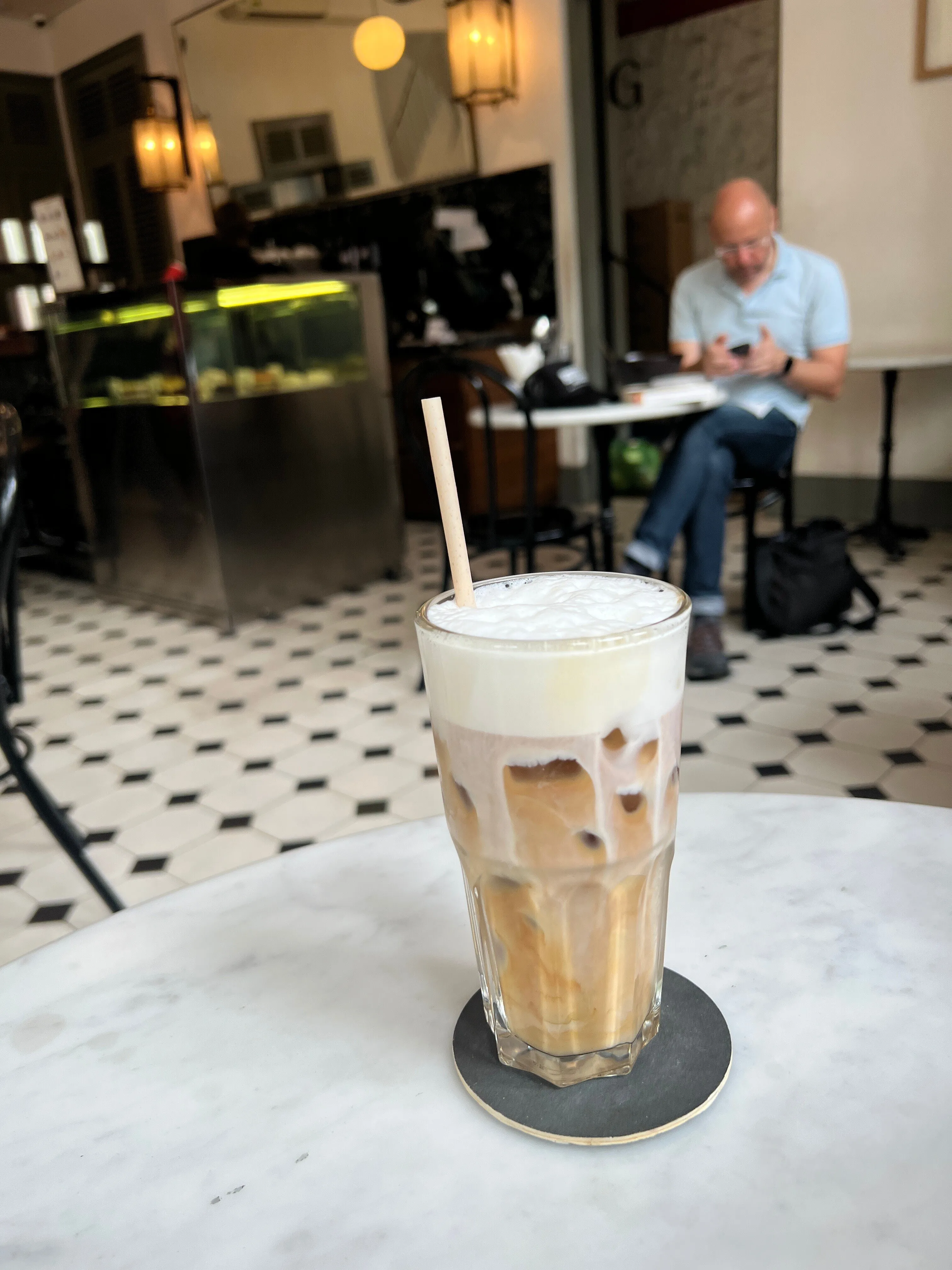
At a terrace seat facing the street, sipping an iced coffee, I reported the situation to President S and Ms. V over Zalo (the LINE-like app most used in Vietnam). After a while, a message came from Ms. V: “Shall we open it at Bank Y?” Smaller than Bank X, but also a megabank, and a bit more flexible, she said. A light seemed to break through my clouded head.
The next morning, Ms. V had apparently called ahead, and at Bank Y we were shown to a large table on the second-floor corporate floor. The day before, Hector and I had huddled together on little round stools at the first-floor counter — today, something was different from the start. When Ms. V arrived, nearly every banker there greeted her warmly. Huh — who is Ms. V? Come to think of it, she was the director running the whole company in Ho Chi Minh City on President S’s behalf, and no doubt an important client for Bank Y. The document they’d flagged the day before could “be submitted later,” and they’d open the account in parallel.
What?! The two engineers looked at each other with the strange smiles of the astonished and the relieved, bowed deeply to the entire second floor, and left the bank. That afternoon, a message reached me on Zalo: “The account has been opened.” In hindsight, I should have listened to Ms. V from the very beginning.
”I saw your money”
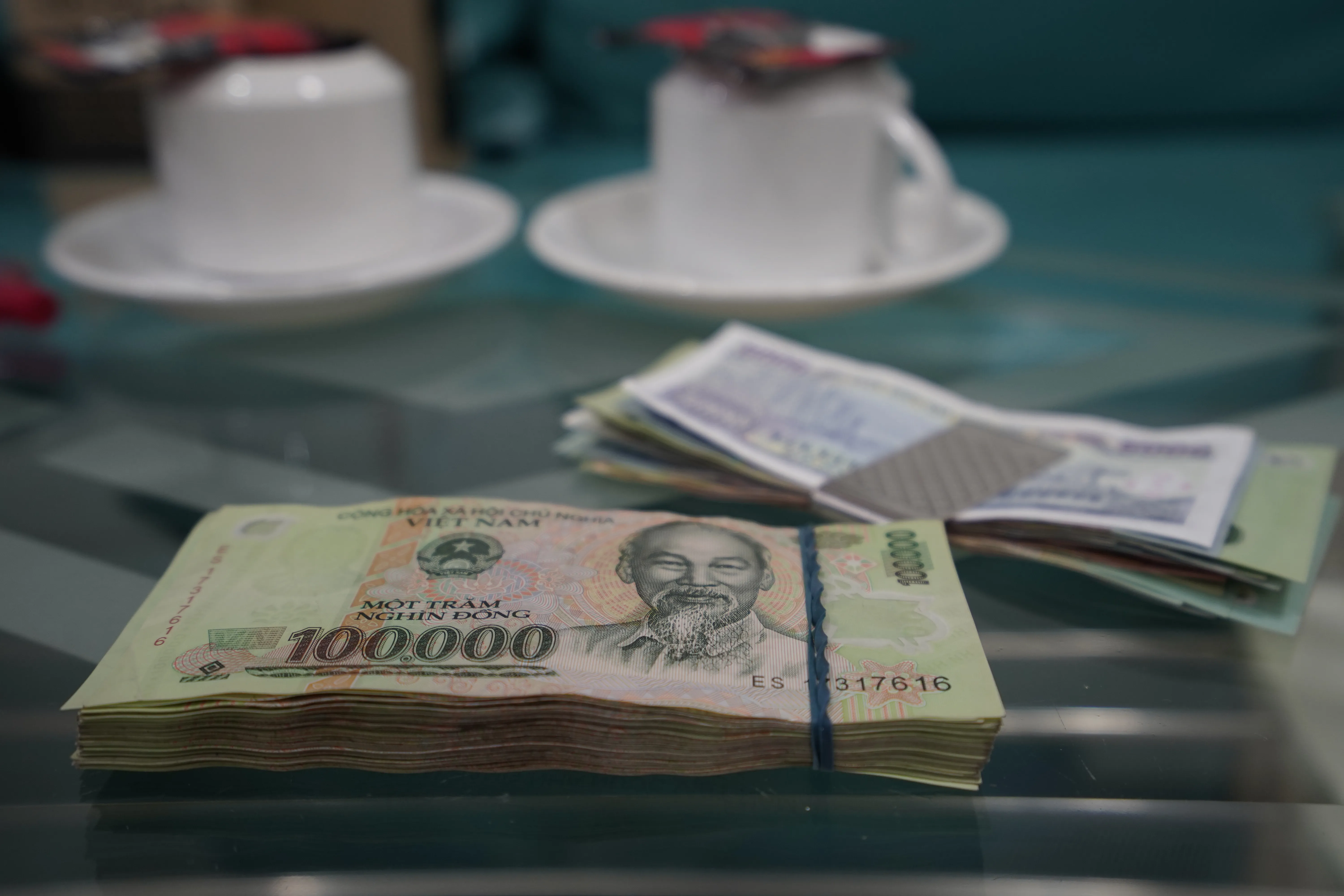
Even with the account open, it wasn’t over. In Vietnam there’s a law that the capital must be transferred within 90 days of the business license being issued. Back in Japan, in the very thick of a weak yen — on the morning of a day the yen had hit a fresh multi-month low — I wired the capital. Nothing to do about the exchange rate but weep.
But a week later, the balance in the app was still zero. I messaged Mr. M, our contact at Bank Y, over Zalo. In Japanese terms, it’s like becoming LINE friends with a megabank employee who replies within thirty minutes. “Doesn’t look like it’s arrived yet. Hang on a little longer,” came the reply. Another week. The first payday was closing in. When I told him again, he wrote “give me a moment” — and then the messages went silent. Two hours passed with no reply. I was out eating lunch when a notification came in on Zalo.
I saw your money
Saw it? What does that mean? Was he spinning the door of some giant vault, like in Lupin III, peering inside? My imagination ran wild. And yet, his one line — “I saw it” — somehow put me at ease. Seven hours later: “The money has been deposited into the account.” The capital I’d waited and waited for had finally arrived.
At a café in the best part of town
After the corporate account came the personal one. My work permit was issued, and I could open my own account too. The bank, of course, was Bank Y, the site of that comeback. Ms. V came along this time as well, and though there were many choices to fill in, without her it would have taken three times as long. Thanks to her, we finished before noon. A country on the rise really does move at a different speed.
Since I don’t live in Vietnam, it’s a restricted account with no cash card — closer to an app account than anything. When I logged in and saw a balance of zero, I thought, “Oh — done.” To a Showa-era guy who still equates a bankbook with a bank account, it felt oddly fresh.
The area around Bank Y is prime Ho Chi Minh City real estate. At a café Ms. V recommended, I drank coffee in the breeze from the ceiling fan, savoring the fact that I’d cleared the first mission. One bank account. For that one small thing — how many times had I been shot down, how many times had I rewritten, how many people had helped me? And still, I saw it through to the end.