
My Range Grew Too Wide, and the Work Vanished — The Day AI Freed Me from the Ten-Finger Limit
In 2020, I'd become so full-stack that no one could tell what I actually did, and my client work dropped to zero. Back then, breadth was a double-edged sword I couldn't wield. What AI agents removed wasn't the value of breadth, but the execution limit of ten fingers and 24 hours. With breadth unleashed, we narrowed our banner to two — the power to finish, and AI-native. This is that story.
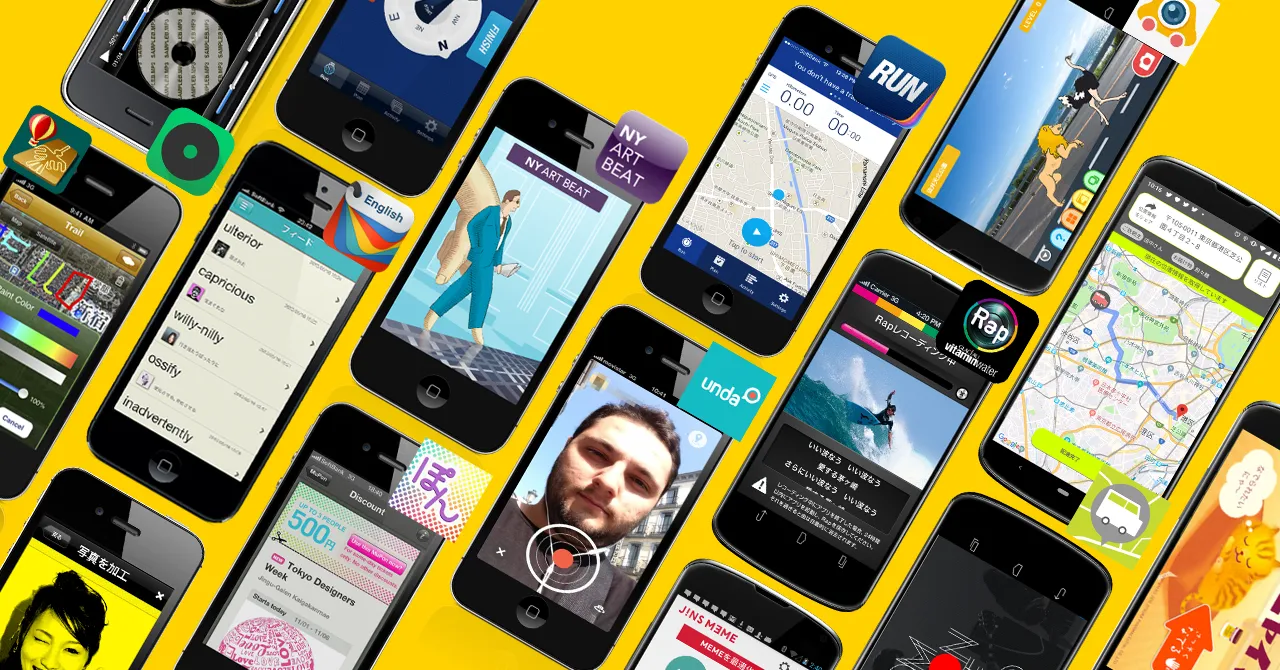
February 2020. The company had just marked its tenth anniversary. And right after New Year’s, our client work dropped to zero.
It began as a company I’d founded because I wanted to build iOS apps. But somewhere along the way — Android, voice apps, machine learning, IoT, location tech, back ends — saying “bring it on” to everything, I’d turned into a full-stack engineer who could build in nine programming languages. And yet, ironically, widening my range that way meant that to most people, it had become unclear what “Goldrush” actually did. Confidential R&D work kept piling up, and there were stretches when I couldn’t even name the projects I’d done — until, at last, the inquiries stopped coming.
My answer, at the time, was to write a note article titled “My Range.” iOS, Android, voice, localization, back end, machine learning, IoT, location consulting, debugging, tech-selection consulting… I simply laid out all thirteen things I could do. Looking back, I was pretty desperate.
Breadth was a double-edged sword
Looking back now, that list was only treating the symptom.
The cure for “no one can tell what you do” isn’t doing more, nor listing what you can do — if anything, the more you list, the blurrier the focus becomes. Back then, I hadn’t seen that.
And there was another limit to breadth. I only have ten fingers. A day is 24 hours. Ishikawa, our COO, has ten fingers too. However broad your knowledge, the number of hands you can move at once doesn’t change. Broad knowledge sat there, stuck, unable to turn into output. The work drying up wasn’t only a “no one can place me” problem; it was also a “can’t convert breadth into output” problem.
Breadth, merely held, was a double-edged sword.
What I actually needed
Looking back, what I truly needed then was two things. A way to turn that breadth into execution, and a sharp banner that names what I am. I had neither. So my breadth stayed a treasure I couldn’t use, and perhaps all it did was leave me quietly fretting.
And then, AI agents arrived
Five years passed. From around 2025, AI agents began evolving into something genuinely usable.
What AI removed wasn’t the value of breadth, but the bottleneck of execution.
Twenty years of knowledge, once bound by ten fingers and 24 hours — the depth to descend all the way to the level of CPU and memory, from the days I wrote assembly, and to picture a program’s runtime; and the breadth to span domains — became, for the first time, “broadly executable.” Ishikawa, our COO, has likewise built up his years of iOS development and been through the work of carrying products to completion, many times over. Once we started using AI agents, I noticed it takes effect in two ways. One is the quality of the decisions made upstream; the other, the quality of the context, strategy, design, and dialogue you hand to the agents. Where the person who sees the whole and the person who moves their hands are split apart, the context you can give an agent tends to stay a single fragment of the whole. The deeper and broader you can see the whole, the deeper the instructions you can give and the judgments you can make — or so it feels to me.
Breadth wasn’t made worthless by AI. If anything, it grew vertically — its volume expanded. That’s what I’ve come to think.
Now is the time to narrow the banner
We decided to narrow the banner that best names our strength down to two.
Axis 1: The power to finish. Carrying an idea through to completion. Its core is the right decisions upstream — what not to build, where to cut, where to end.
Axis 2: AI-native. Taking products, services, and processes built on generative AI and purpose-built AI models from concept all the way to implementation.
Making full use of the breadth AI has unleashed, we’ll concentrate our work on these two. So that we come to be known as “a company that sees these two through,” we’ll keep quietly stacking up results, day after day.
Proof: the decision not to build
Half of “the power to finish” is, you could say, the decision not to build.
A project we’d taken on in Vietnam once swelled to twice its estimate. Two and a half months in, I stopped it. What protected the company wasn’t running the whole way through, but deciding where to end — I wrote about that in a separate article.
Decisions like this happen in Japan every day, too.
For example, in a location-based proof of concept (PoC), a client once brought me an idea for authentication: “Do away with sign-up; to avoid collecting personal information, auto-issue both the user ID and the password, and store them on the device.” It was a well-considered, privacy-minded idea, from someone technically sharp. It’s buildable, and impersonation can be prevented by design.
But I pointed this out. Even if the ID is anonymous, location data can be tied to — or inferred about — an individual once you cross-reference it against, say, a roster of PoC participants. If so, that’s the same as collecting personal information. A half-measure of “avoiding personal data” isn’t avoidance at all — and this authentication idea would leave a vulnerability to abuse that surfaces once you reach the productization phase.
That single point called for knowledge across several domains at once — authentication security, how to think about privacy, and the nature of location data. It’s the kind of pitfall you slip right past if you’re only looking at one narrow field. We proposed a different authentication method and rebuilt the design — before building anything.
Broad knowledge shows its worth most in this “move before building.”
And, at the deepest layer
At the deepest layer of that “AI-native,” we’re building our own products.
A multimodal AI that treats video by meaning — a multi-stage AI that splits a long video into scenes, summarizes it, and makes it searchable and reportable after the fact. We started it with a very small team and built it up ourselves, from the model layer to the infrastructure to the billing. Those are our two own products, atoindex and repodas.
In development carved up by division of labor, building this “breadth” as one seamless whole is hard. The one who sees the whole is the one who builds it — so it can be built through, without fracture, from design to implementation. That’s how we see it. That breadth lifts the quality of the design and the judgment we hand to the AI agents. The breadth of knowledge and experience I once couldn’t fully use has become, now, our most reliable ally.
If video or multimodal AI touches your business, I’d be glad if you’d take a look at these two products first.
Talk to us before building
When you come to us with a new-business idea, the first conversation and a rough estimate are on us — no charge. Because we want to understand your business, the value you mean to deliver, and your roadmap first. From there, when we move into serious validation or design — the most important phase, where we work out what to build and what not to build — we’ll scope that as its own small piece and propose it separately. The decision not to build, the decision to cut: it all starts there.
iOS, web, AI — whatever the domain, if there’s something you want to bring to completion, please feel free to reach out here. We’ll think it through together, starting from what you ought to build — or ought not to.