NVIDIA GTC 2026 On-Site Report
 #NVIDIA #GTC #AI #PhysicalAI
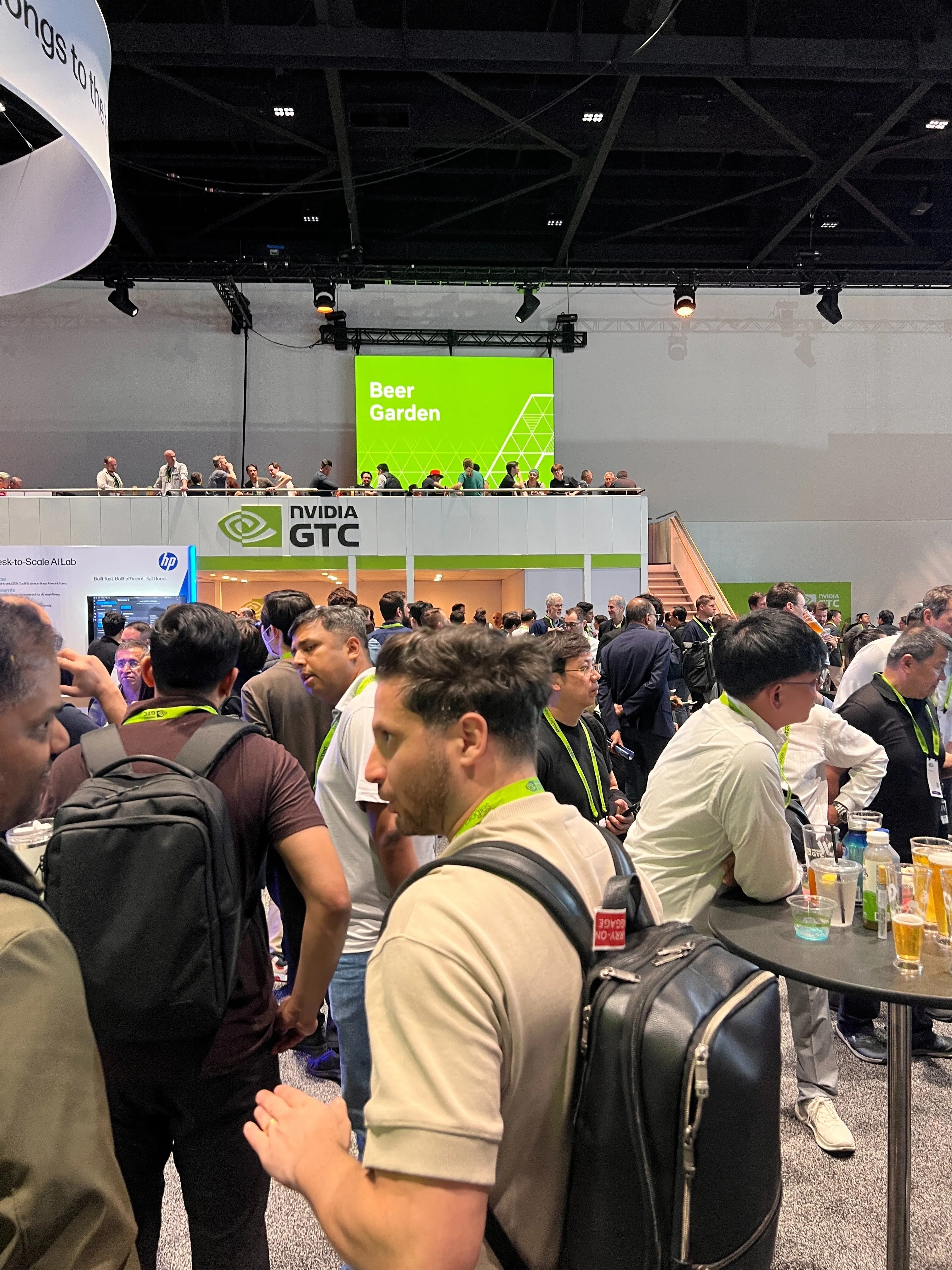
 I attended NVIDIA GTC 2026 in San Jose again this year — the one week where developers, researchers, and founders from all over the world gather at the frontier of AI. After being worn down by jet lag last year, this time I flew in to San Francisco three days early to adjust before heading to the venue.
Arriving early in San Francisco
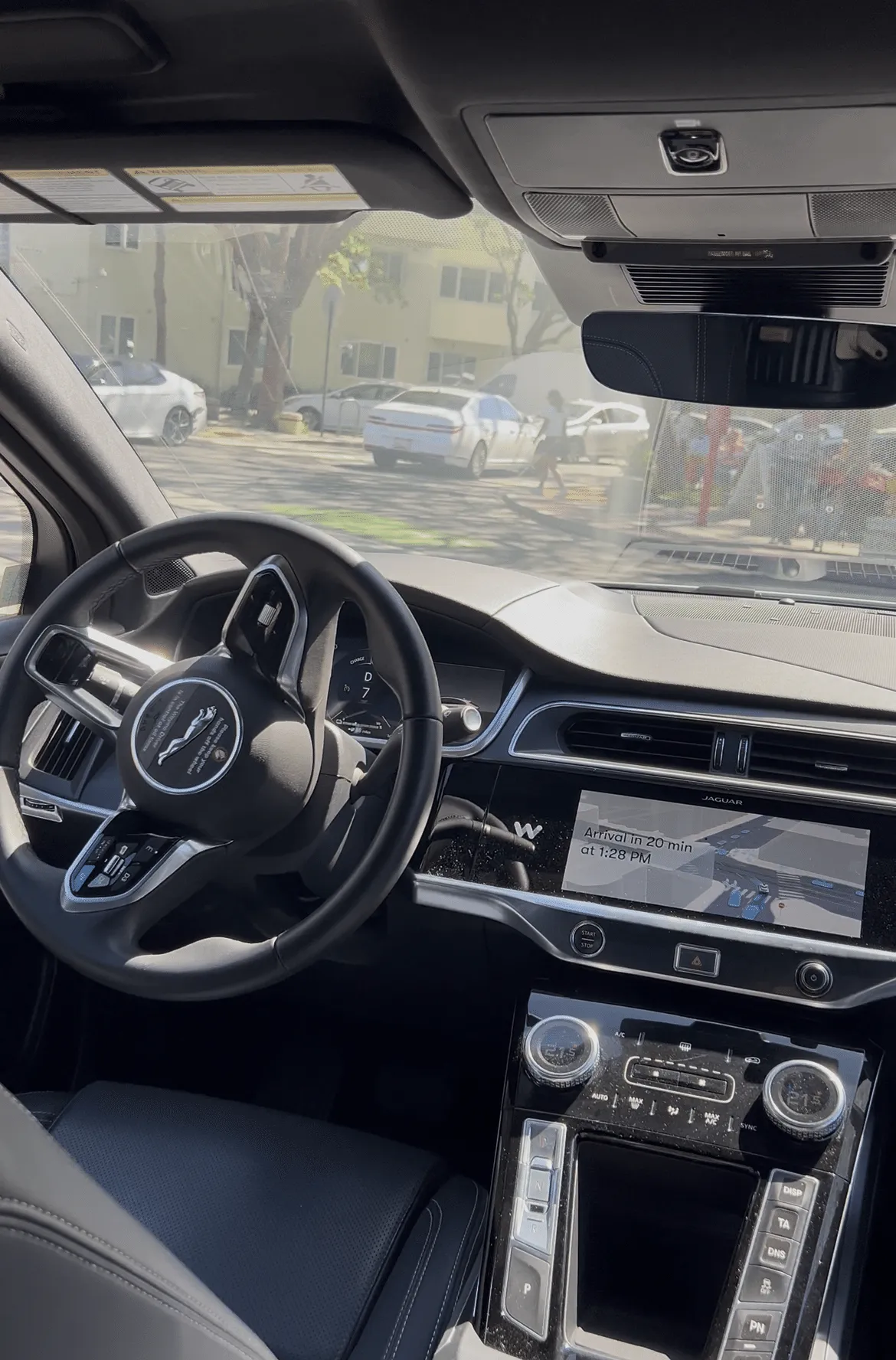
I stayed near Alamo Square and spent a few days retracing memories of visiting this city 25 and 13 years ago — crossing a park heavy with the scent of conifers, walking down to the Embarcadero waterfront. On the day I moved to San Jose, I called a self-driving Waymo taxi for the first time. The wheel turned on its own, and it firmly nudged the car into traffic on right turns. It clearly drove better than a human — not unsettling at all, but so stable it was actually reassuring. From Millbrae I switched to Caltrain and rode down through the towns of Silicon Valley to San Jose.
Day 1: A nine-hour workshop
For day one I took a paid full-day training, “Adding New Knowledge to LLMs” — I chose it because I wanted to properly learn fine tuning this year. It ran end to end: data curation with NeMo Curator (unifying single quotes and tabs, reformatting Unicode, removing PII, deduplication), CPT (Continued Pretraining), Supervised Fine Tuning and PEFT (LoRA) with NeMo Customizer, measuring model performance with NeMo Evaluator, and alignment with NeMo-RL. The NeMo-RL exercise — aligning an LLM to rewrite its answers into old-fashioned, Shakespearean English — made me realize you can even do things like that. Since the DLI instances only run during the workshop, I came away with a practical lesson: save your Jupyter notebooks locally on the spot. Afterward I stopped by the Gear Store, looked over the DGX Spark and Jetson Thor hardware, and chatted with a Nemotron running on a DGX Spark. Striking up impromptu technical conversations with the people next to you is one of the joys of GTC.
Day 2: Jensen Huang’s keynote
The highlight of day two was the keynote by NVIDIA CEO Jensen Huang. Wanting a good seat, I lined up at SAP Center before 7 a.m. and was lucky enough to get into the arena floor right in front of the stage. The crowd was so electric that Jensen joked, “This is a technology conference — it’s not the Super Bowl.”
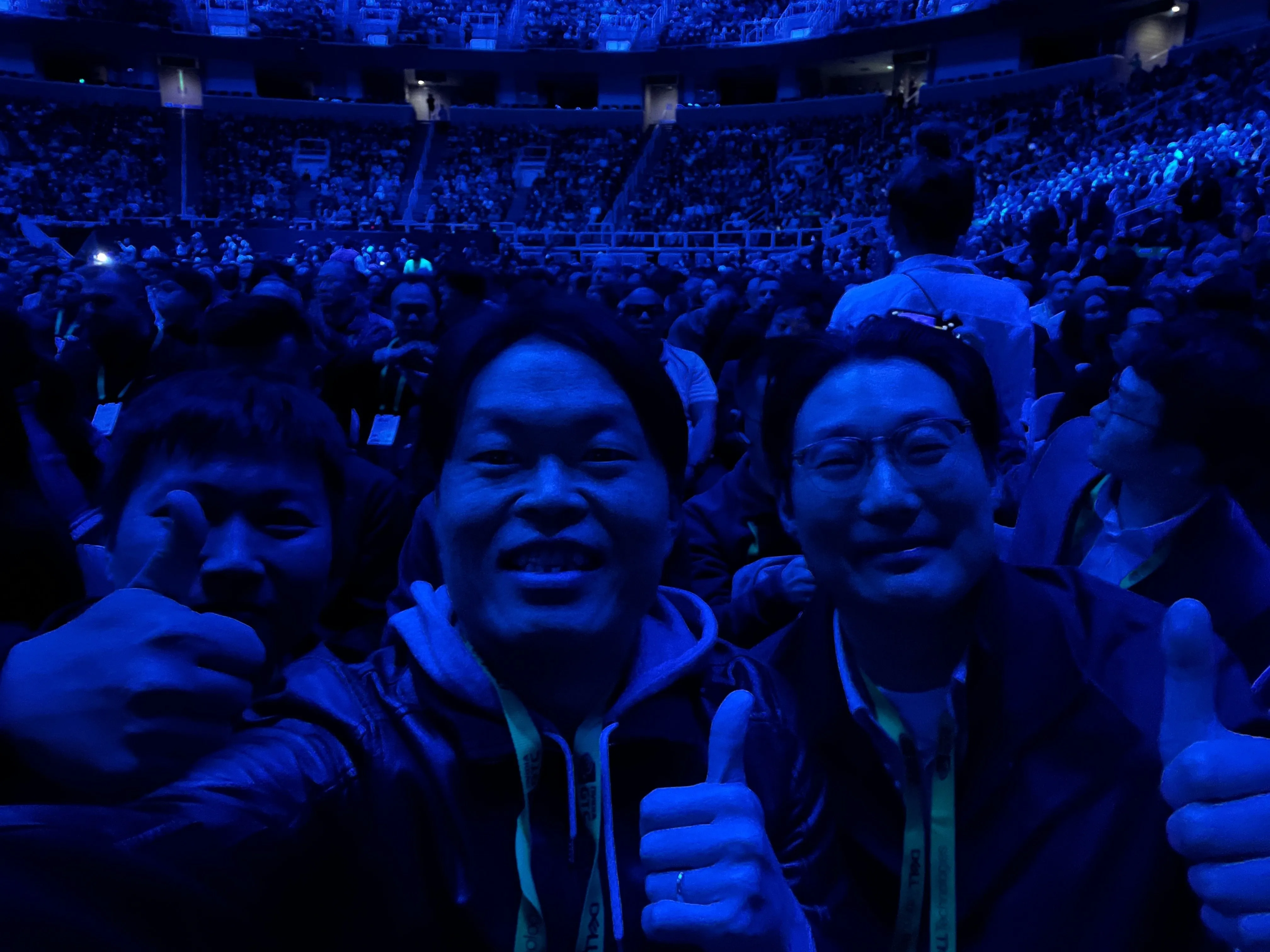
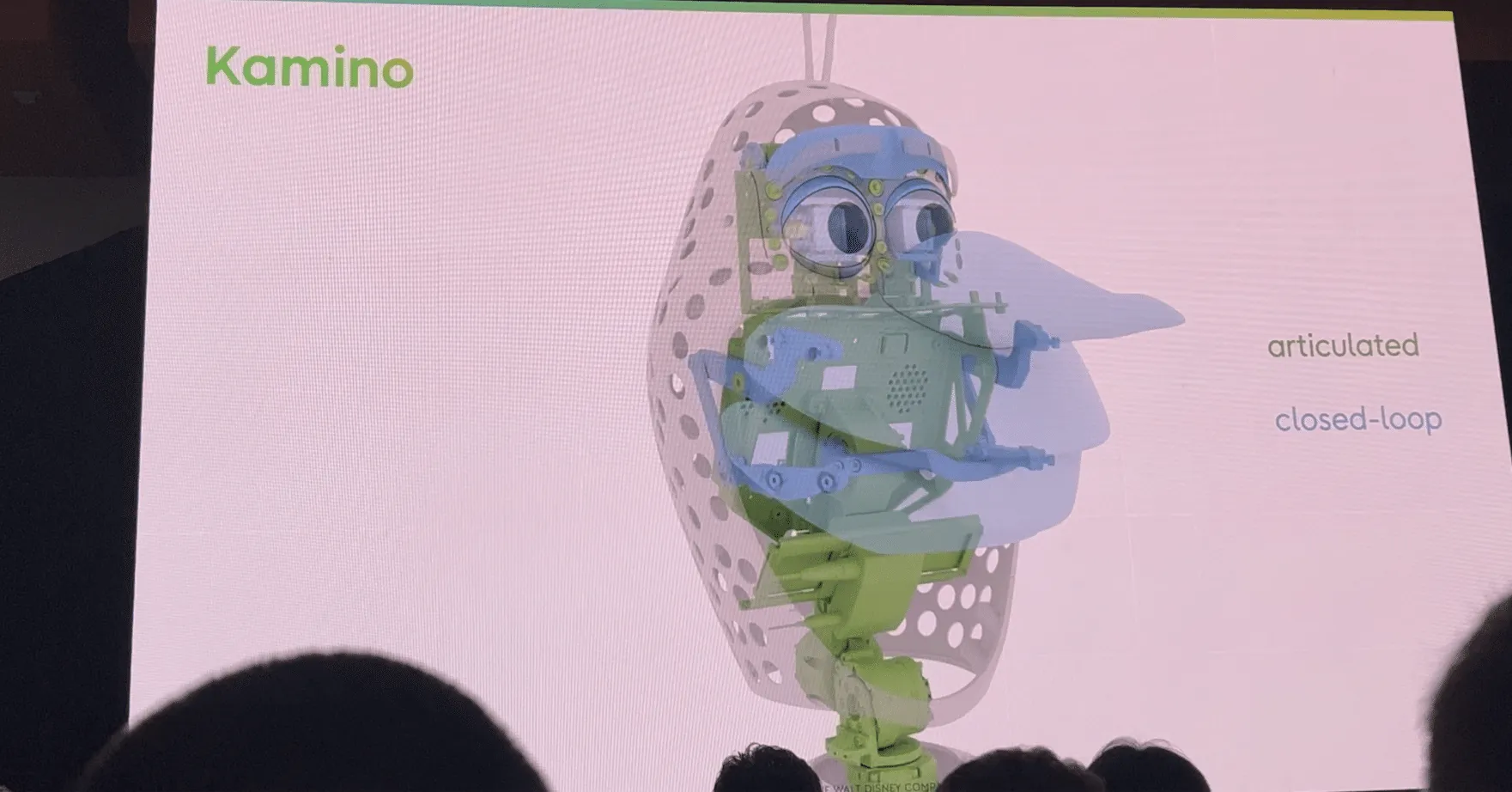
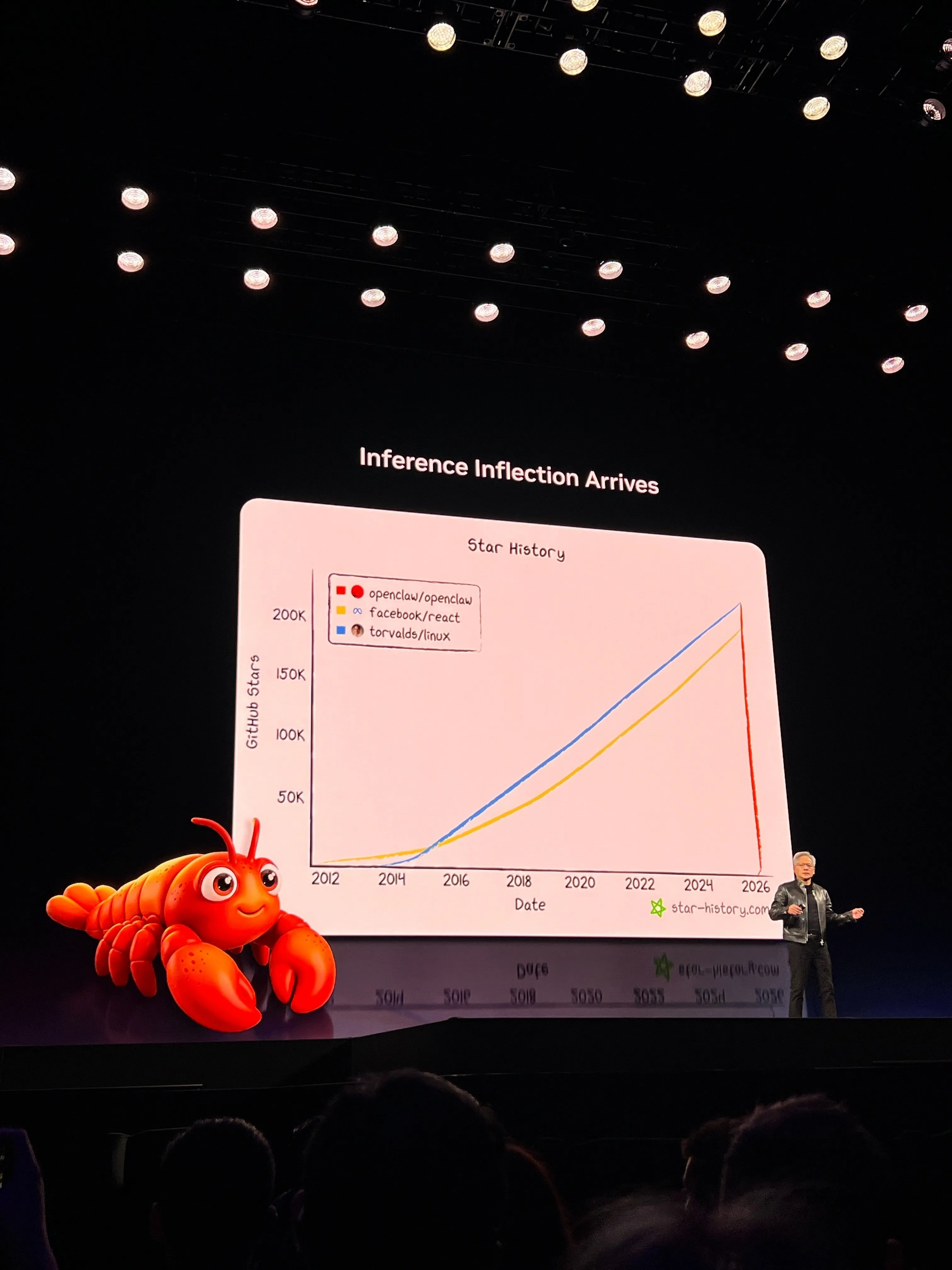
I’ll leave the full details to the press, but the three main themes I took away were these. First, the leap in tokens generated per watt (Token/Watt) with the new “Vera Rubin” GPU. Building on last year’s idea that the data center is no longer a place to process data but an “AI factory” that generates the tokens AI consumes, this year showed how much a new product can push that number up. Second, Physical AI: joint research with Google DeepMind and Disney Research and the evolution of physics simulation in Isaac Sim, which led to the Disney Olaf robot that appeared at the very end of the talk. Third, OpenClaw — arguably the top layer of agentic AI. That a chip maker like NVIDIA was watching it so closely, and had released its own distribution, NemoClaw, which guarantees security around credentials and external access, was honestly something I hadn’t imagined before coming to the US.
Use cases I got to see up close
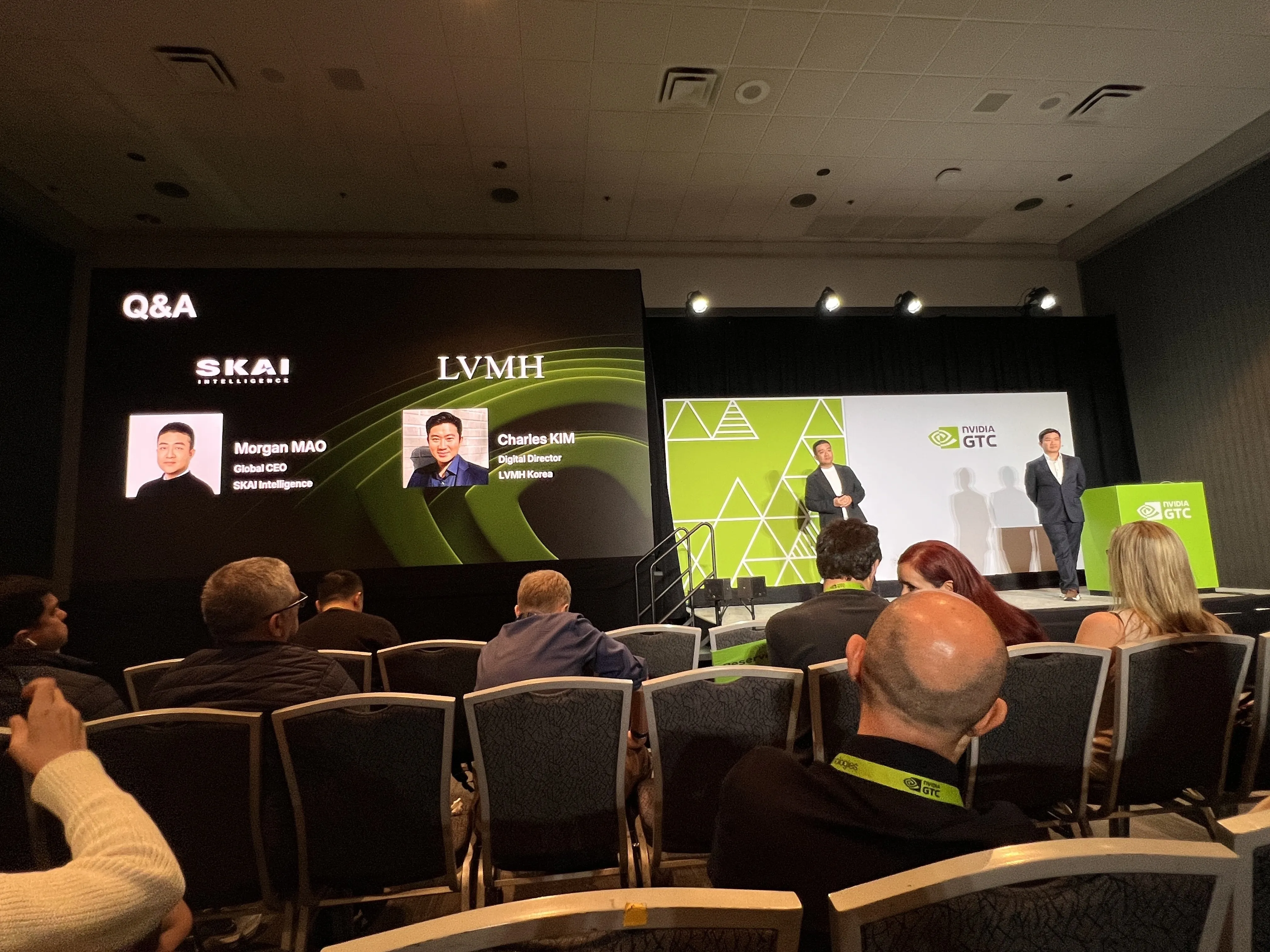
One lesson from last year is that if you keep going to sessions on the same theme, you’ll always hit a good one. What stood out most this year was a case study on digital twins from the LVMH group in Korea. It was an effort to carry out an enormous volume of marketing photo and video production inside a virtual space that reproduces physics 100% on NVIDIA Omniverse, and the words of the tech-company president who had actually built it carried real weight. Ninety-nine percent quality versus the physical world isn’t enough — it has to be 100% to meet what the maisons demand, and that’s exactly why Omniverse was needed. His answer that they reused CAD data wherever it existed and scanned the rest themselves was equally impressive.
The speech sessions were dense too. One of the largest food-service SaaS companies in the US talked, almost like a comedy act, about replacing drive-thru ordering with an AI voice interface. At first they didn’t train their own model — they aimed for the fastest launch with prompt engineering (their words: “Prompt & Play”), and it didn’t work at all. From there they took on model training and lifted the order success rate from around 40% to 85% — a dramatic story. Playing back real sample audio of corrections and ambiguous orders in the room made me feel just how hard automating a drive-thru really is. There was also a demo of a Speech-to-Speech model that responds within 80 milliseconds without going through text, and a Full Duplex model that keeps understanding even when a person interrupts mid-sentence — the kind of things that made me want to try them the moment I got home.
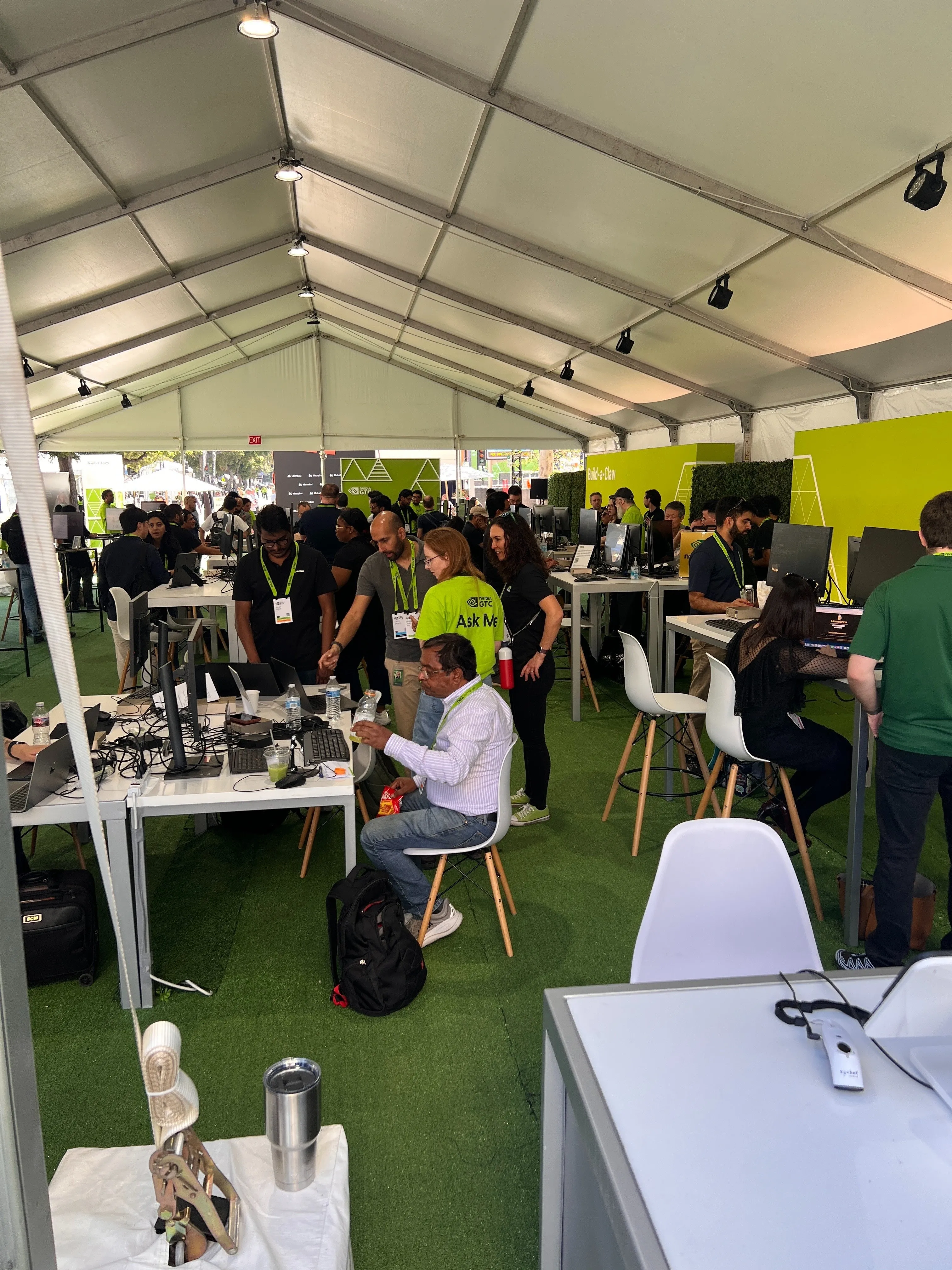
During the event, at an outdoor tent called “Claw Bar,” I got to connect a local Nemotron LLM with OpenClaw and hands-on delegate a task from WhatsApp all the way through to receiving the result. On the way back, several things I want to build with it started coming to mind.
Final day: Physical AI and One Brain
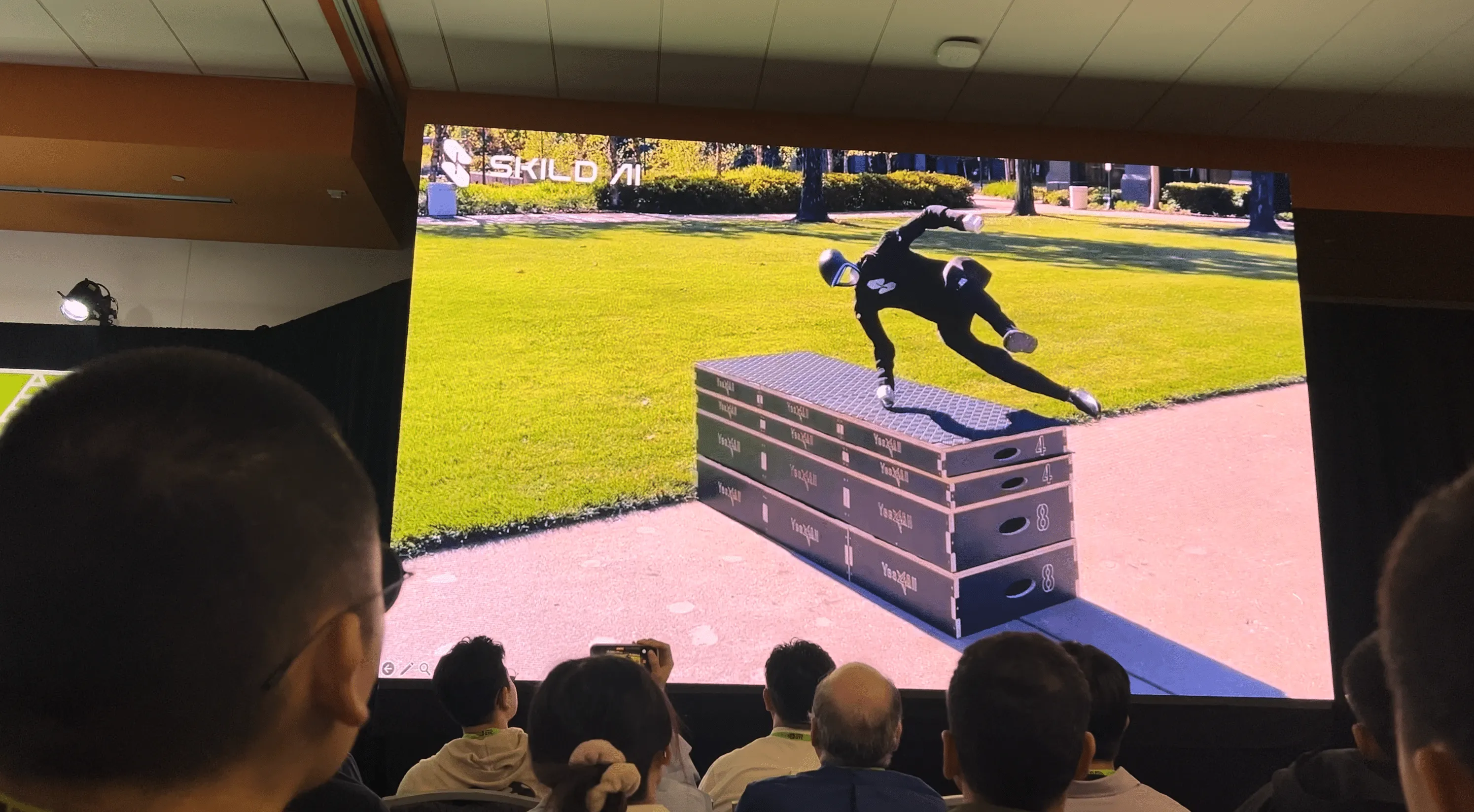
The last day was billed as Nemotron Day and was packed with robotics — an Isaac Sim overview and a Newton session with speakers from NVIDIA, Google DeepMind, and Disney Research. The standout was the presentation from SKILD AI. “One Brain” — the era of building a separate brain for each robot (quadruped, biped, arm) is over; their vision is to drive any robot with a single brain. In one video, a dog-shaped robot with its knees zip-tied trembled but adapted to the situation within seconds and began walking on its knees, drawing spontaneous applause from the room. Demo after demo showed robots recovering from unreasonable constraints — it was a day when I felt the wave of Physical AI in my bones.
Over five days, from fine tuning to Physical AI to agentic AI, I got to confirm with my own hands and eyes what is happening at the frontier of AI right now. At Goldrush Computing, we feed this kind of firsthand knowledge back into AI-driven product design and development and into helping companies adopt AI. Until next year’s GTC, I want to keep stacking up daily experiments and discoveries.